
Quarry Loader Contamination Control: Protect The Service Process, Not Just The Filter
A practical owner’s review of fluid handling, service cleanliness, sampling and follow-up for wheel loaders working in dusty aggregate operations.
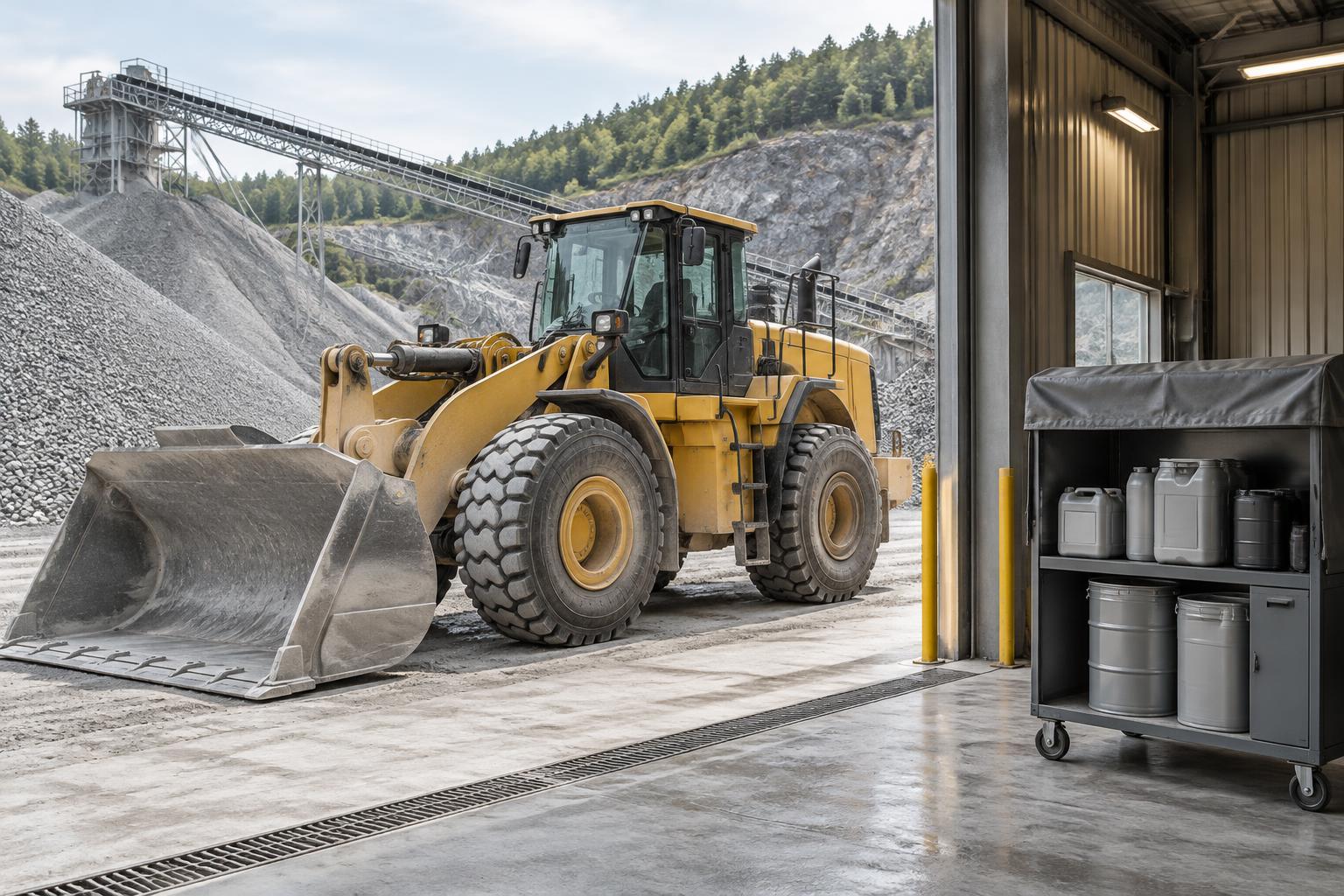
Dust is an ordinary part of an aggregate operation. It should not become an ordinary part of the fluid-handling process. For quarry fleet owners, contamination control is more than buying the right filter: it includes how fluids are stored, how service equipment is handled, how parts are protected and how concerns are followed through.
This is a management review, not an instruction for opening a hydraulic system or changing an OEM service interval. Trained personnel should follow the exact machine manual, site procedures and applicable safety requirements. The owner’s job is to make sure those people have the information, materials and working conditions they need.
Walk the service process from storage to machine
Review where fluids and service supplies are stored and how their identity is maintained. Check whether containers are protected, closed and clearly assigned to the intended fluid. Ask how the team prevents confusion between products, especially when several machine makes operate at the same site.
Then follow the dispensing equipment to the work area. Identify how hoses, fittings and tools are protected between uses and who confirms their condition. Do not assume a clean-looking container guarantees a clean transfer process. Use manufacturer and supplier guidance to define the appropriate handling practices.
Make parts cleanliness part of the job plan
Ask how replacement components remain protected before installation and how exposed connections are managed during service. Include the work location in the plan: a dusty outdoor repair may need controls that are different from those in an enclosed bay.
Caterpillar’s contamination-control guidance discusses the importance of clean fluids, components, hoses and service processes. Use that as a basis for reviewing practices with your maintenance provider, not as a substitute for equipment-specific procedures.
Verify specifications before ordering or filling
Maintain the machine’s identity and configuration alongside approved fluid and filter references. Check the authoritative manual and any applicable OEM updates. Similar packaging or a familiar part number is not enough to establish suitability for a different unit.
The equipment maintenance library provides a starting reference for supported makes and models. Confirm specifications for the actual machine before purchasing or servicing it. Where records are incomplete, resolve the uncertainty with the manufacturer or qualified service provider rather than treating a guess as a fleet standard.
Use sampling to build a history, not a diagnosis by itself
If the fleet uses fluid analysis, agree on the sampling procedure with the laboratory or service provider. Record the asset, compartment, hours, sample date and relevant service history. Follow their instructions for clean sampling equipment and representative collection.
Cat’s fluid-sampling guidance explains how analysis can identify potential contaminants and wear indicators and how routine sampling supports trend information. An isolated report needs context. Have abnormal findings interpreted by qualified personnel and document the next action.
Do not invent a quarry-wide service interval
Dusty or demanding work may require application-specific guidance, but that does not justify a blanket interval change across all machines. Start with the applicable manual and ask the OEM or service provider how operating conditions affect the plan.
Caterpillar’s oil-drain discussion ties interval decisions to manufacturer guidance, application and analysis. It is not permission to extend another manufacturer’s interval. Record any approved change, its basis and who authorized it.
Close findings before they become recurring notes
Review open sampling concerns, specification questions, storage issues and repeated service observations. Each should have an owner, a practical next step and a check-in date. After a correction, confirm the process changed rather than simply clearing the note.
Start with one service area and one group of loaders, then apply verified practices across the fleet. Bring your mixed-fleet maintenance records and follow-up needs to a goAardvark demo. A better record supports the discussion; it does not replace the people responsible for safe, correct maintenance.
More from the blog
Know where your fleet stands before the day slips.
Book a demo to see how goAardvark fits your heavy-civil operation.