
Quarry Haul Cycles: Find The Bottleneck Before Adding Another Truck
A field-ready way to separate loading delays, haul-road constraints and plant queues before investing in more aggregate hauling capacity.
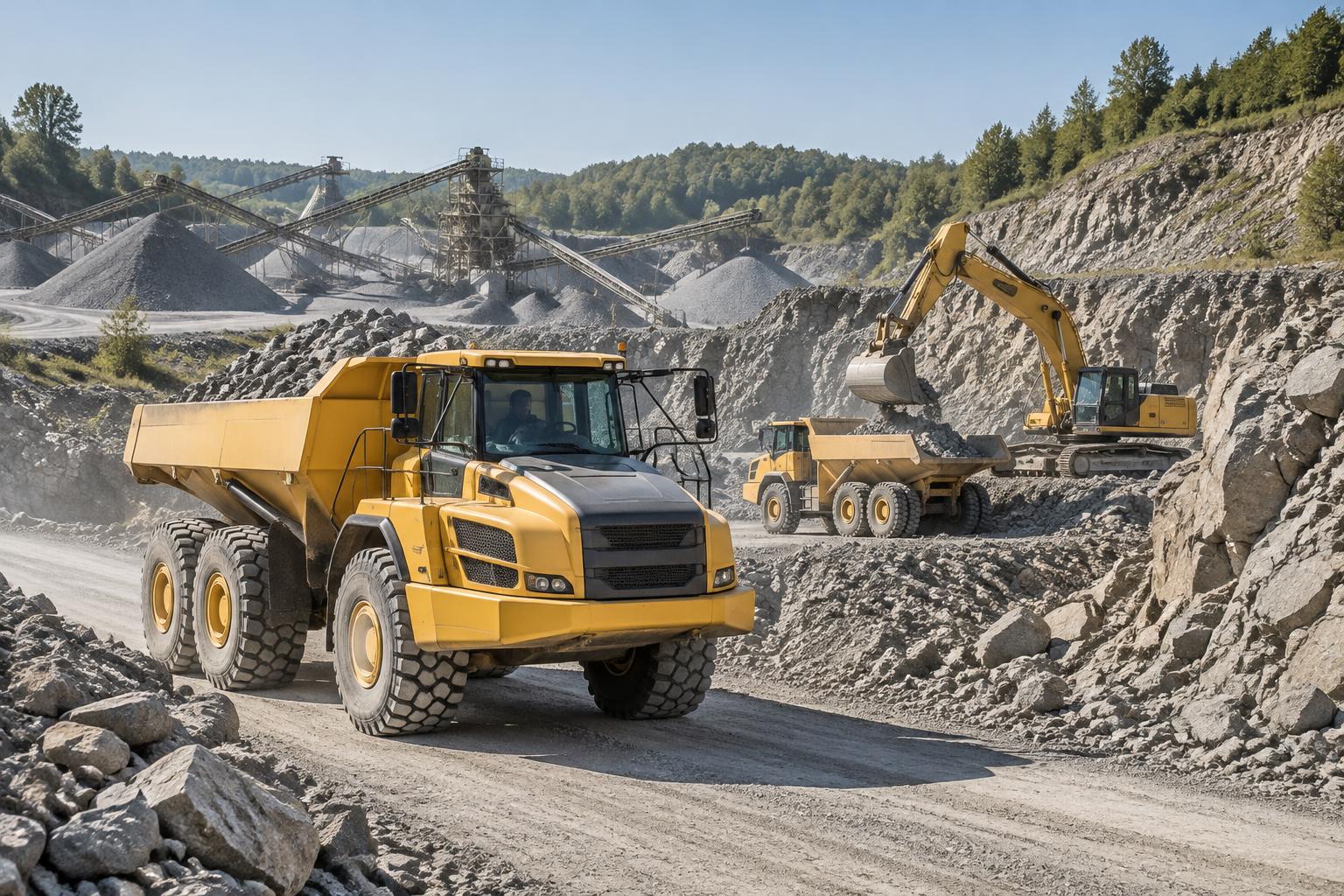
When an aggregate operation misses its production target, another haul truck can look like the obvious answer. But a truck cannot fix a loader waiting for material, a congested dump point or a plant that cannot accept the next load. For fleet owners, the useful question is not how many trucks are running. It is where the whole material-moving system loses time.
A haul-cycle review should connect the loading tool, trucks, route and receiving point. Start with direct observation and records you can trust. Treat this as a production investigation, not permission to increase speed, exceed payload limits or relax site traffic controls.
Break the cycle into observable stages
Follow a load from the queue at the loading face through loading, loaded travel, waiting at the destination, dumping and empty return. Record the start and finish of each stage using a consistent definition. If two supervisors measure loading differently, their results will not be comparable. Capture several cycles across representative parts of the shift rather than drawing conclusions from one good run.
Add context: route, material, weather, loading tool, truck, operator assignment and interruptions. A haul-road change or a different material face can explain a longer cycle without pointing to a mechanical problem. Note whether times came from observation, dispatch records or telematics; these sources may measure different events.
Find the queue that actually limits production
Trucks consistently waiting at the face suggest a different constraint from trucks waiting at the crusher. A loading tool waiting for trucks calls for another investigation again. Ask what the queue prevents the system from doing, and whether it persists throughout the shift or only during a particular activity.
Walk the route with the responsible site team. Identify crossing conflicts, changes in surface condition, restricted dump access and places where operating rules require waiting. Do not treat necessary safety stops as wasted time. Production changes must preserve the traffic plan and applicable operating limits.
Check fleet match without borrowing a universal target
Bucket capacity, material density, truck payload and loading geometry all affect the match. Caterpillar’s truck-pass guidance explains why loading-tool and truck matching matters. Its guidance is a starting point for discussion, not a specification for every mixed fleet or quarry.
Have the site and equipment teams confirm actual machine limits and representative payloads. More bucket passes may reflect a mismatch, but changing loading technique or bucket selection requires qualified review. A truck count alone does not establish balanced capacity.
Separate maintenance constraints from process constraints
A slow cycle might involve equipment condition, but a queue does not diagnose a fault. Ask operators about changes in performance and check shop records for unresolved issues. Keep units under repair separate from available units so the analysis does not assume capacity the fleet cannot supply.
For planned maintenance, use the equipment maintenance library as a reference and confirm requirements against the exact machine manual. Coordinate service windows with production instead of quietly postponing them to make the cycle report look better.
Test one change and measure the whole system
Agree on a specific intervention: adjust dispatch sequencing, address a road-maintenance issue, change a loading arrangement or investigate a machine concern. Name an owner and define the comparison period. Monitor downstream queues as well as the stage you changed. Saving time at the face has limited value if the same trucks now wait longer at the plant.
Before approving another truck, write a short decision note: observed constraint, evidence, proposed change, safety review, expected effect and follow-up date. Cat’s quarry site-evaluation approach reinforces the value of reviewing fleet match and production together. Bring your own cycle definitions and mixed-fleet questions to a goAardvark demo rather than starting with a promise that more equipment means more output.
More from the blog
Know where your fleet stands before the day slips.
Book a demo to see how goAardvark fits your heavy-civil operation.